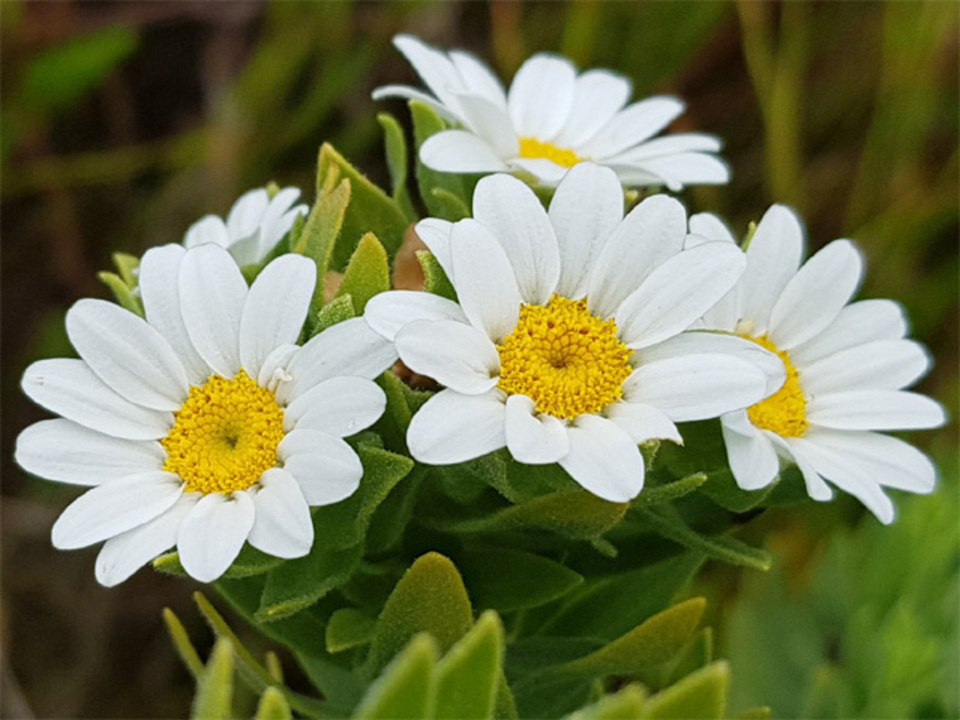
Flora Detail
| Common Name | Swamp Daisy, mountain daisy, bellis; bels, belskruie, belsbos, belsebos, belsbossie, belsebossie (Afr.) |
| Family | Asteraceae (Daisy Family) |
| Date Observed | 14-07-2021 |
| Category | Shrubs |
|---|---|
| Catalogue No. | 3402RGu |
| Flowering Time | Autumn,Winter |
| Colour | White to Grey |
| Locations Observed | |
| Estuary | Many |
| Koppie | |
| Nature Reserve | Few |
| Small Holding | Many |
| Village | |
| Greater Rooiels | Many |
Osmitopsis asteriscoides
Information
Swamp
daisy, mountain daisy, bellis; bels, belskruie, belsbos, belsebos,
belsbossie, belsebossie (Afr.)
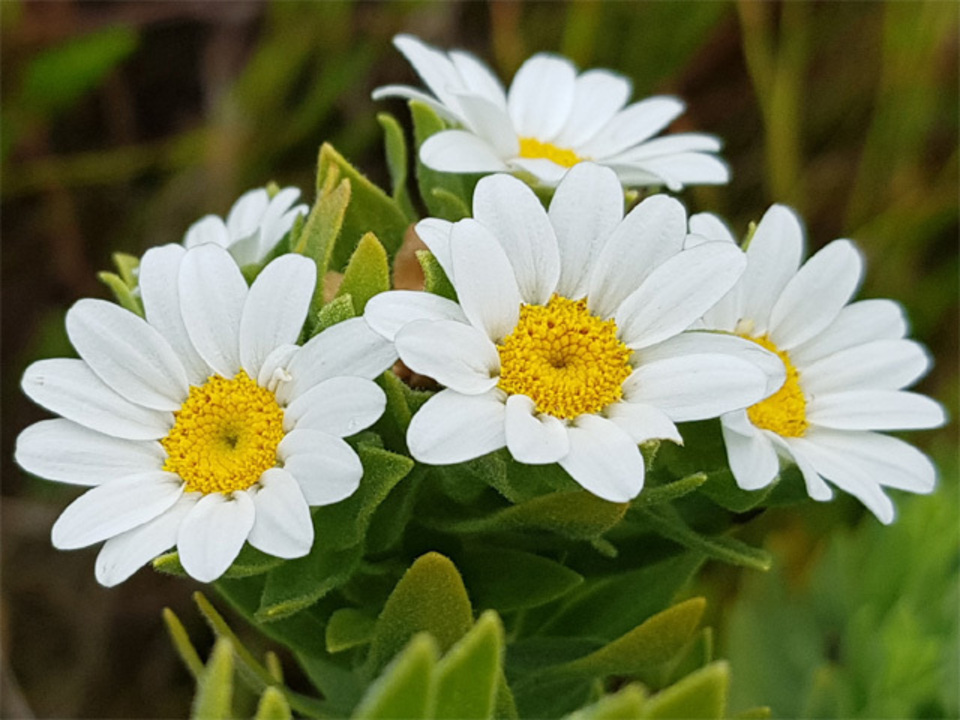
Osmitopsis
asteriscoides
Family: Asteraceae
swamp daisy, mountain
daisy, bellis (Eng.); bels, belskruie, belsbos, belsebos, belsbossie,
belsebossie (Afr.)
INTRODUCTION
Hikers are always charmed
by the bright white flowers and the aromatic velvet camphor-scented leaves.
DISTRIBUTION AND HABITAT
Swamp daisies grow on
sandstone soil from the Cape Peninsula to the Riviersonderend Mountains. As the
name indicates, they prefer the swamps, so they are found in the wetlands of
the Rooiels Reserve, on the small holdings and in our mountains near streams.
REACTION TO FIRE.
After a fynbos fire, the
Osmitopsis asteriscoides plants resprout, or new plants grow from seeds.
They flower from spring to
early summer and plants can get up to two metres tall, reaching above the
hikers.
WHY CALL IT “BELSKRUIE”?
The Afrikaans common name belskruie
is derived from Bellis Perennis, a name commonly used for the European daisy. “Kruie”
refers to the aromatic herbal leaves.
USES
A brandy infused with an
extract of the aromatic leaves in the old days, was called
"belsbrandewyn" – bels brandy – not to be confused with Bell’s whiskey.
This was used for all sorts of ailments, like coughs, hoarseness, chest
complaints, stomachache, influenza, fevers and body pains.
The velvety leaves were
also be brewed and the teas used for the same ailments.
A volatile oil rich in
eucalyptol and camphor has been extracted from the leaves and are used for home
remedies.
But the bottom line is –
rather go to the doctor.
Status: Least Concern.