Flora Detail
| Common Name | Sprawling Celery |
| Family | Apiaceae - Carrot Family |
| Date Observed | 26-06-2020 |
| Category | Ground cover |
|---|---|
| Catalogue No. | 1102RGu |
| Flowering Time | |
| Colour | White to Grey |
| Locations Observed | |
| Estuary | Few |
| Koppie | |
| Nature Reserve | Few |
| Small Holding | Few |
| Village | Few |
| Greater Rooiels | |
Apium decumbens
Information
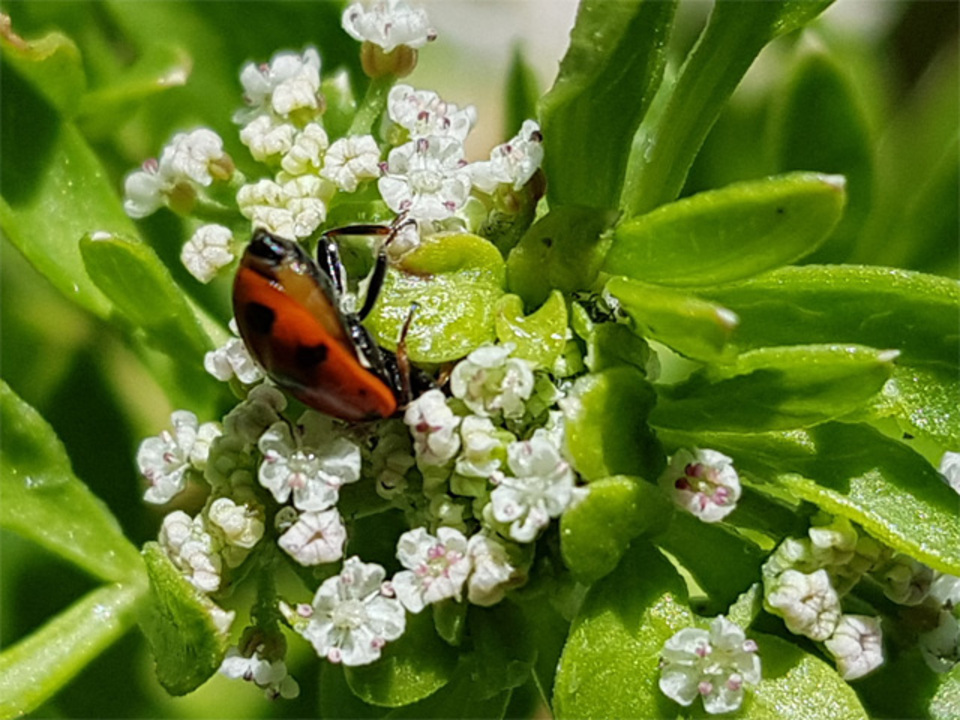
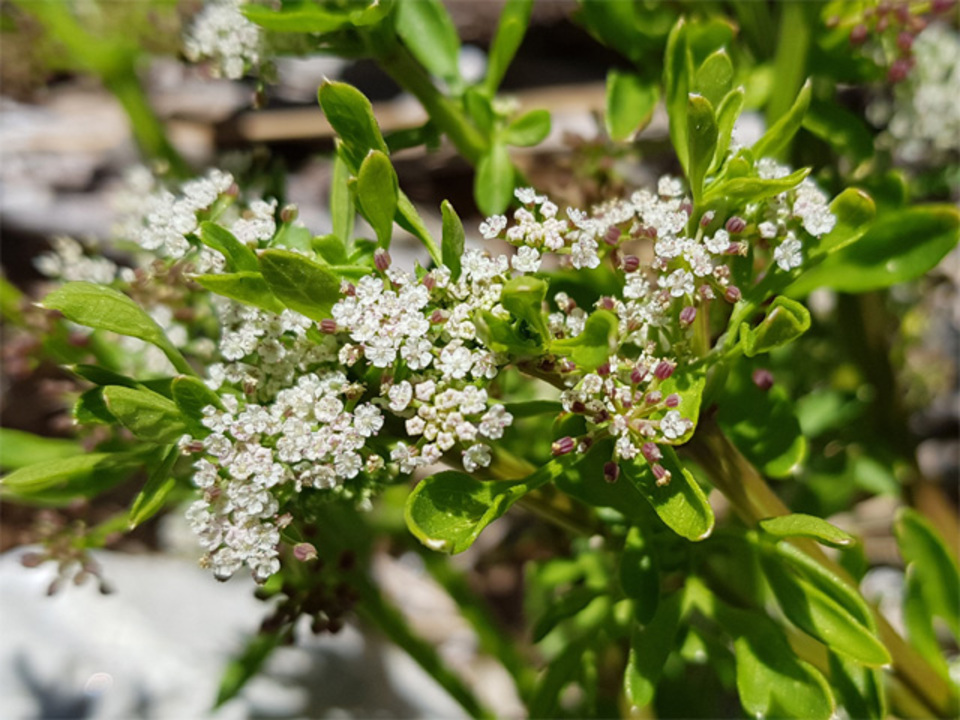
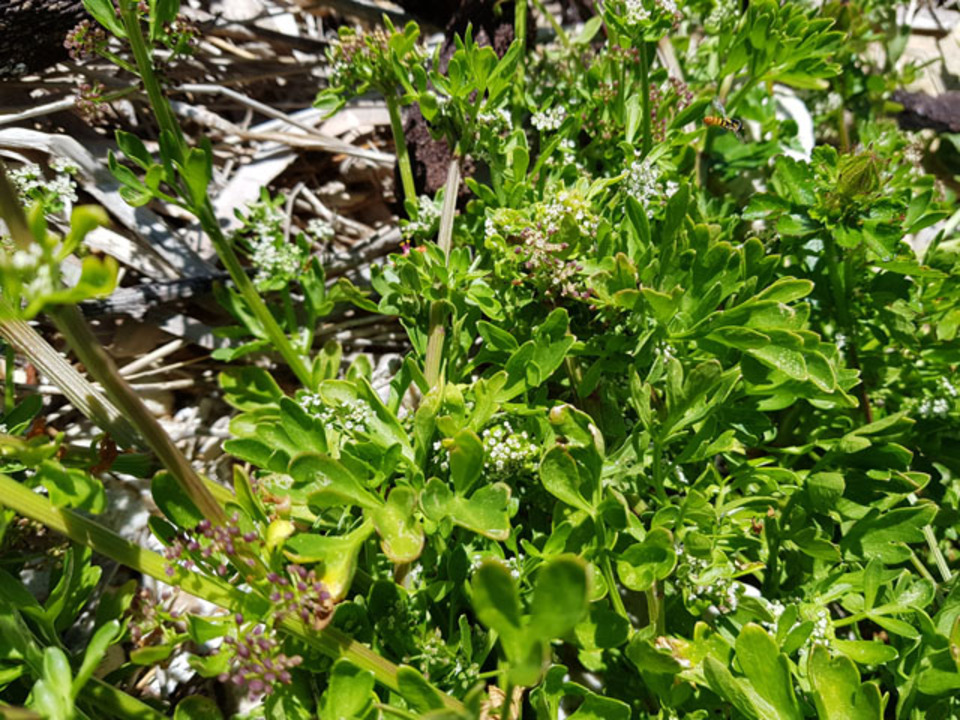
Sprawling Celery

Apium decumbens is a scientific synonym for Apium graveolens L., which is commonly known as wild celery or simply celery. It belongs to the Apiaceae family (carrot family).
Here are the details regarding Apium graveolens.
Taxonomy and Botanical Details
Type: Biennial to perennial herb.
Description: A hardy, aromatic plant that grows up to 1 meter (roughly 3 feet) high. It features pinnate to bipinnate leaves and produces small white flowers in compound umbels.
Habitat: Naturally grows in wet, marshy areas, particularly salt marshes.
Growth and Distribution
Native Range: Temperate regions of Europe, Asia, and North Africa.
Preferred Conditions: It prefers moist soil and can handle saline conditions. It thrives in full sun to light shade.
Uses and Characteristics
Culinary: While the wild form has a very strong flavour, it is edible (leaves and roots) and used in soups or as a seasoning.
Medicinal: It is used as an herb with reported properties as a diuretic, carminative, and anti-inflammatory.
Caution: The plant should not be consumed in large amounts, and it is advised against for pregnant women.
It is important to note that A. decumbens refers specifically to the wild, spreading (decumbent) form of celery often documented in South African flora, which is considered a naturalized exotic.
AI Overview