Flora Detail
| Common Name | Long stalk Spider head |
| Family | Proteaceae - Protea Family |
| Date Observed | 26-12-2024 |
| Category | Shrubs |
|---|---|
| Catalogue No. | 3571RG |
| Flowering Time | Spring,Summer |
| Colour | Pink to Mauve |
| Locations Observed | |
| Estuary | |
| Koppie | |
| Nature Reserve | |
| Small Holding | Few |
| Village | |
| Greater Rooiels | Few |
Serruria elongata
Information
Long stalk Spider head
SERRURIA ELONGATA
Family: Proteaceae
Common names: Long-stalk Spiderhead (Eng.); Langsteelspinnekopbos (Afr.)
DESCRIPTION
Elegant, perfumed, classy and drop-dead beautiful, Serruria
elongata is a stunner when encountered while hiking in the fynbos.
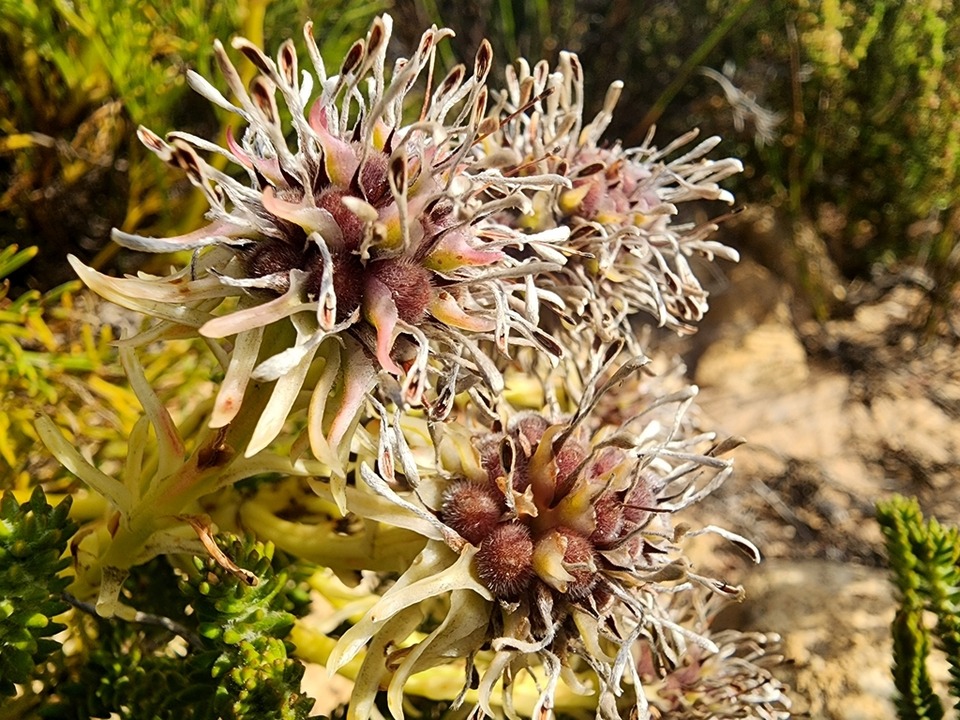
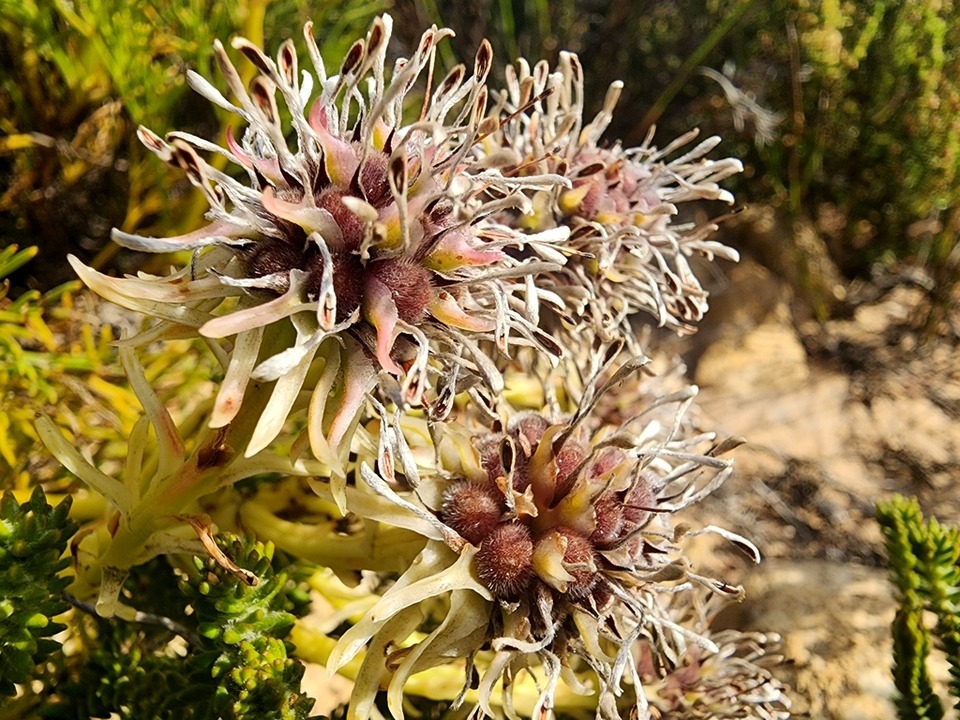
From a distance, the flower heads look like spiky
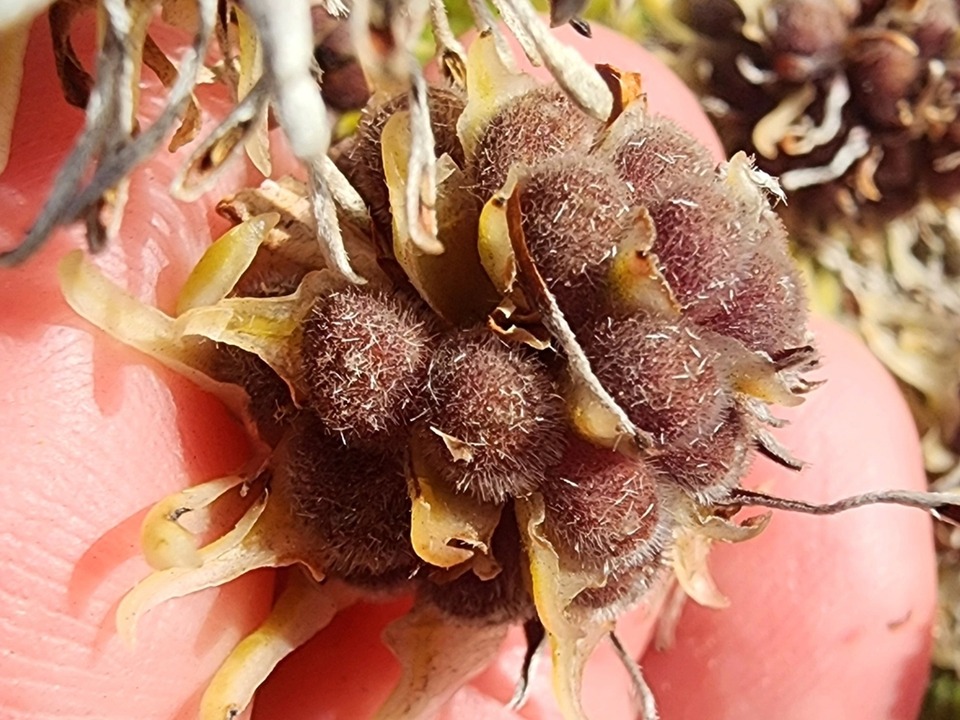
pom-poms. They are pink and covered in short, silvery hairs, giving them the
appearance of having been lightly frosted.
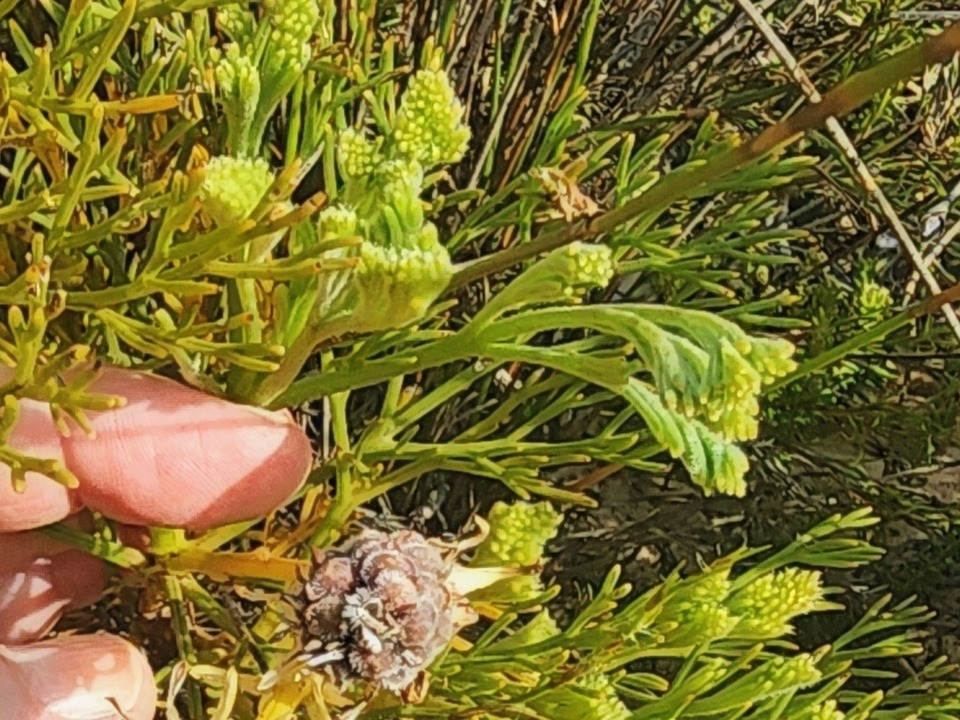
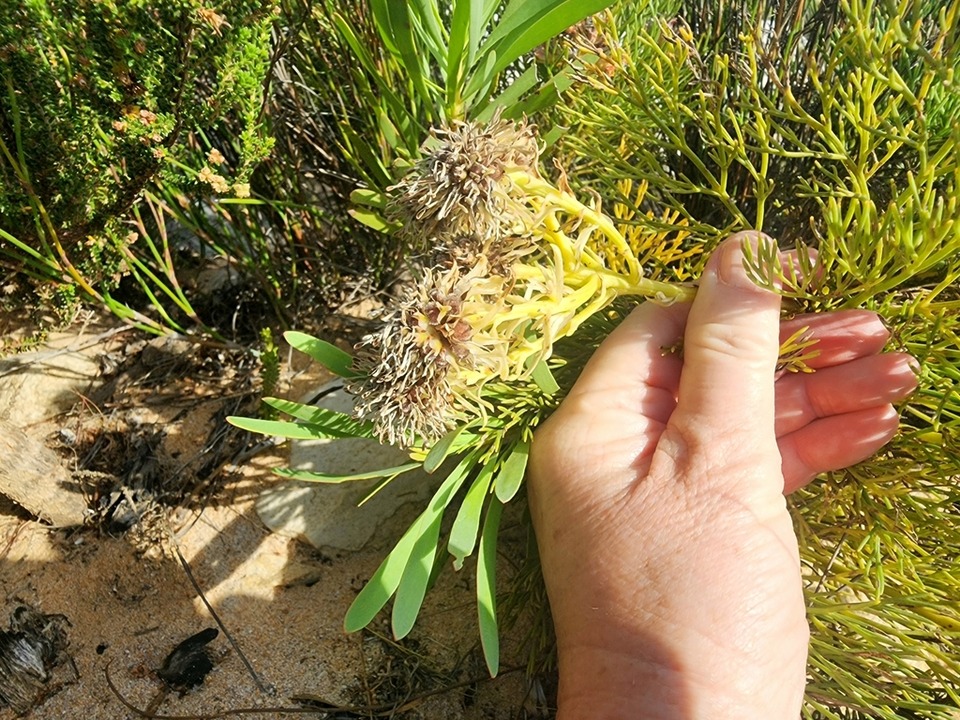
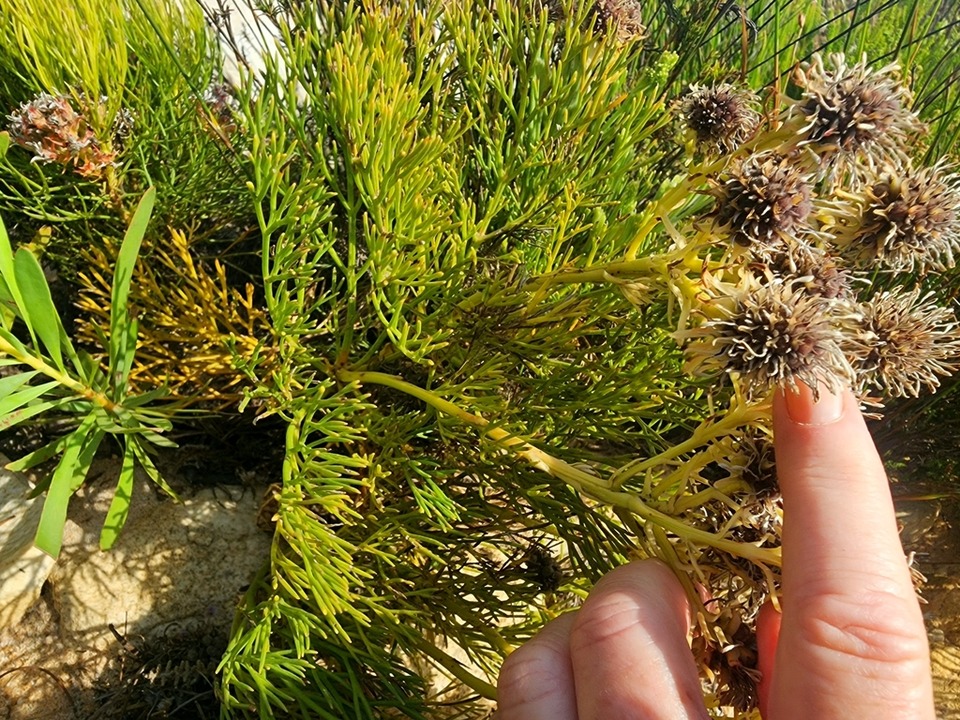
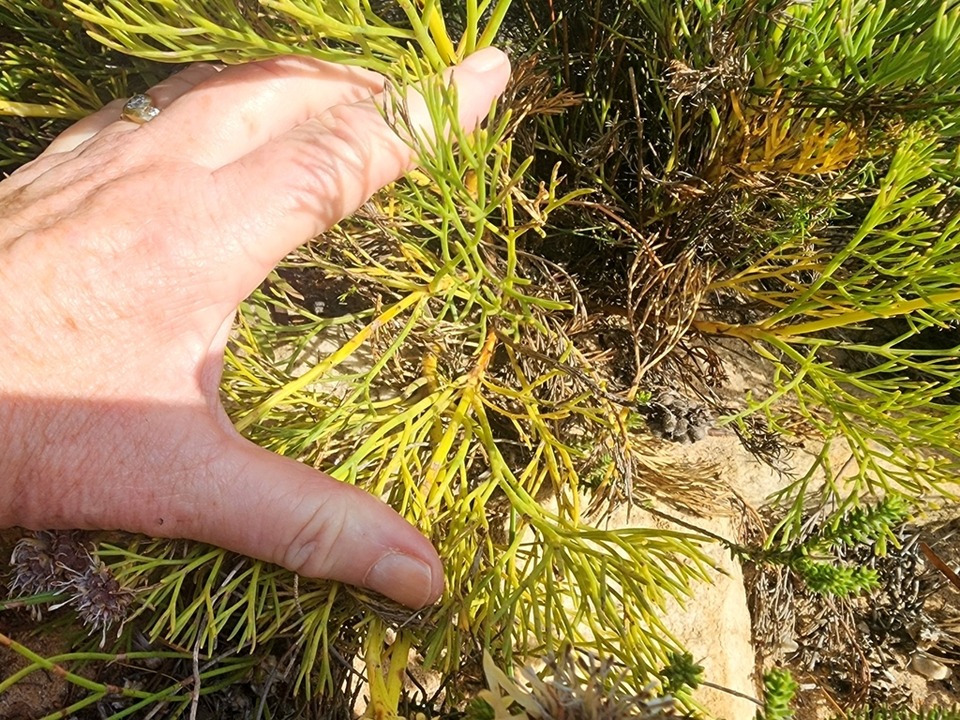
The leaves are tightly grouped in pseudo-whorls
around the base of the peduncle.
DISTRIBUTION & HABITAT
The Long-stalk Spiderhead is a localised species.
It prefers sandstone soils and stony, well-drained slopes in full sun.
What a delight it is to come across these beautiful
plants in the Kogelberg Mountains and on the mountains around Rooiels.
DERIVATION OF NAME & HISTORICAL ASPECTS
The genus Serruria is named after Dr James
Serrurier, a botanist at Utrecht in the early 18th century.
Some species have fine hairs that look as though a
spider has spun a web around the flower head. This may be the reason for the
Afrikaans name spinnekopbos, literally “spider bush”.
ECOLOGY – ALIEN ANTS IN THE PANTS
The sweet fragrance of Serruria elongata
intensifies at night, and it is believed that the flowers are pollinated by
moths.
Native Black Pugnacious Ants carry the seeds
underground, where they remain protected and dormant until the next fire,
followed by rain and the rejuvenation of the fynbos.
Unfortunately, alien ants are throwing a spanner in
the ecological works. They do not transport the seeds underground in the same
way as the native ants, leaving the seeds more exposed to rodents, birds and
fire.
CONSERVATION STATUS
Fynbos populations are vulnerable to the impacts of alien plants and development. Serruria elongata faces additional threats from too-frequent fires and naturalised Argentine ants.
Click to find out more on Inaturalist